




Blog
Seeing Further, Shooting Smarter: A Deep Dive Into Rifle Scope Optics
So how did the classical Latin become so incoherent? According to McClintock, a 15th century typesetter likely scrambled part of Cicero’s De Finibus in order to provide placeholder text to mockup various fonts for a type specimen book. It’s difficult to find examples of lorem ipsum in use before Letraset made it popular as a dummy text in the 1960s, although McClintock says he remembers coming across the lorem ipsum passage in a book of old metal type samples. So far he hasn’t relocated where he once saw the passage, but the popularity of Cicero in the 15th century supports the theory that the filler text has been used for centuries.
Don’t bother typing “lorem ipsum” into Google translate. If you already tried, you may have gotten anything from “NATO” to “China”, depending on how you capitalized the letters. The bizarre translation was fodder for conspiracy theories, but Google has since updated its “lorem ipsum” translation to, boringly enough, “lorem ipsum”. One brave soul did take a stab at translating the almost-not-quite-Latin.
According to The Guardian, Jaspreet Singh Boparai undertook the challenge with the goal of making the text “precisely as incoherent in English as it is in Latin – and to make it incoherent in the same way”. As a result, “the Greek ‘eu’ in Latin became the French ‘bien’ […] and the ‘-ing’ ending in ‘lorem ipsum’ seemed best rendered by an ‘-iendum’ in English.”
March 1.5x-15×42 – Shuriken Turrets
| Weight | N/A |
|---|---|
 ReticleThe crosshair or pattern you use to aim and make adjustments. ReticleThe crosshair or pattern you use to aim and make adjustments. | DR-TR2B, FML-4 |
 IlluminationLights up the reticle to make it easier to see in low-light conditions. IlluminationLights up the reticle to make it easier to see in low-light conditions. | Yes |
| Adjustment dialControls used to adjust elevation and windage. | Normal, Shuriken |
| Focal planeFocal Plane refers to where the reticle sits inside the scope and whether it stays the same size or scales as you change magnification. | DUAL, FFP |
| Body tube diameter (mm)The width of the main tube, which affects mounting rings and adjustment range. | 34 |
| DistanceThe range at which the focus or parallax adjustment operates. | 10yd – ∞ |
| Elevation TravelThe total vertical adjustment range available for shooting at different distances. | 40mil |
| Exit Pupil (high) (mm)How wide the beam of light is at the highest magnification, affecting brightness at high zoom. | 2.8 |
| Exit Pupil (low) (mm)How wide the beam of light is at the lowest magnification, affecting brightness and ease of viewing. | 8.7 |
| Eye Relief (high)The distance your eye can be from the scope and still see a full image at high magnification. | 73-98 |
| Eye Relief (low)The distance your eye can be from the scope and still see a full image at low magnification. | 72-97 |
| 0-Set DeviceA feature that lets you quickly return the adjustment dial back to your zero setting. | No, Yes |
| Eyepiece angle | Normal |
| Eyepiece focus | Fast |
| Field of View (real) (high) | 1.33 |
| Field of View (real) (low)How much area you can see through the scope at the lowest magnification. | 13.3 |
| Field of View (real) (high) at 100 mThe width of the area visible at 100 meters on the highest magnification. | 2.3 |
| Field of View (real) (high) at 100 yds | 6.9 |
| Field of View (real) (low) at 100 m | 23.4 |
| Field of View (real) (low) at 100 yds | 70.2 |
| Lens | ED |
| Magnification (Low)Controls how close or far the target appears when looking through the scope. | 1.5x |
| Magnification (High)Controls how close or far the target appears when looking through the scope. | 15x |
| Objective Diameter (mm)The size of the front lens, which affects how much light enters the scope. | 42.0 |
| Windage TravelThe total left-to-right adjustment range for compensating for wind or zeroing. | 20mil |
March 1.5x-15×42 – Shuriken Turrets – DR-TR2B, 1.5x-15
| Weight | 1 kg |
|---|---|
| ReticleThe crosshair or pattern you use to aim and make adjustments. | DR-TR2B |
| IlluminationLights up the reticle to make it easier to see in low-light conditions. | Yes |
| Adjustment dialControls used to adjust elevation and windage. | Normal, Shuriken |
| Focal planeFocal Plane refers to where the reticle sits inside the scope and whether it stays the same size or scales as you change magnification. | DUAL, FFP |
| Body tube diameter (mm)The width of the main tube, which affects mounting rings and adjustment range. | 34 |
| DistanceThe range at which the focus or parallax adjustment operates. | 10yd – ∞ |
| Elevation TravelThe total vertical adjustment range available for shooting at different distances. | 40mil |
| Exit Pupil (high) (mm)How wide the beam of light is at the highest magnification, affecting brightness at high zoom. | 2.8 |
| Exit Pupil (low) (mm)How wide the beam of light is at the lowest magnification, affecting brightness and ease of viewing. | 8.7 |
| Eye Relief (high)The distance your eye can be from the scope and still see a full image at high magnification. | 73-98 |
| Eye Relief (low)The distance your eye can be from the scope and still see a full image at low magnification. | 72-97 |
| 0-Set DeviceA feature that lets you quickly return the adjustment dial back to your zero setting. | No, Yes |
| Eyepiece angle | Normal |
| Eyepiece focus | Fast |
| Field of View (real) (high) | 1.33 |
| Field of View (real) (low)How much area you can see through the scope at the lowest magnification. | 13.3 |
| Field of View (real) (high) at 100 mThe width of the area visible at 100 meters on the highest magnification. | 2.3 |
| Field of View (real) (high) at 100 yds | 6.9 |
| Field of View (real) (low) at 100 m | 23.4 |
| Field of View (real) (low) at 100 yds | 70.2 |
| Lens | ED |
| Magnification (Low)Controls how close or far the target appears when looking through the scope. | 1.5x |
| Magnification (High)Controls how close or far the target appears when looking through the scope. | 15x |
| Objective Diameter (mm)The size of the front lens, which affects how much light enters the scope. | 42.0 |
| Windage TravelThe total left-to-right adjustment range for compensating for wind or zeroing. | 20mil |
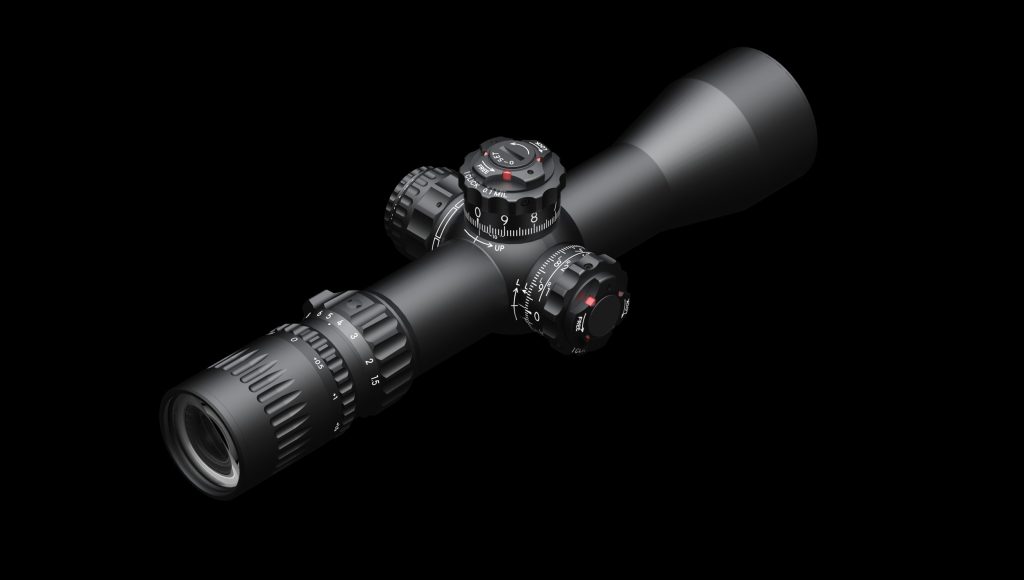
March 1.5x-15×42 – Shuriken Turrets – DR-TR2B, 1.5x-15
| ReticleThe crosshair or pattern you use to aim and make adjustments. | DR-TR2B |
|---|---|
| IlluminationLights up the reticle to make it easier to see in low-light conditions. | Yes |
| Adjustment dialControls used to adjust elevation and windage. | Normal, Shuriken |
| Focal planeFocal Plane refers to where the reticle sits inside the scope and whether it stays the same size or scales as you change magnification. | DUAL, FFP |
| Body tube diameter (mm)The width of the main tube, which affects mounting rings and adjustment range. | 34 |
| DistanceThe range at which the focus or parallax adjustment operates. | 10yd – ∞ |
| Elevation TravelThe total vertical adjustment range available for shooting at different distances. | 40mil |
| Exit Pupil (high) (mm)How wide the beam of light is at the highest magnification, affecting brightness at high zoom. | 2.8 |
| Exit Pupil (low) (mm)How wide the beam of light is at the lowest magnification, affecting brightness and ease of viewing. | 8.7 |
| Eye Relief (high)The distance your eye can be from the scope and still see a full image at high magnification. | 73-98 |
| Eye Relief (low)The distance your eye can be from the scope and still see a full image at low magnification. | 72-97 |
| 0-Set DeviceA feature that lets you quickly return the adjustment dial back to your zero setting. | No, Yes |
| Eyepiece angle | Normal |
| Eyepiece focus | Fast |
| Field of View (real) (high) | 1.33 |
| Field of View (real) (low)How much area you can see through the scope at the lowest magnification. | 13.3 |
| Field of View (real) (high) at 100 mThe width of the area visible at 100 meters on the highest magnification. | 2.3 |
| Field of View (real) (high) at 100 yds | 6.9 |
| Field of View (real) (low) at 100 m | 23.4 |
| Field of View (real) (low) at 100 yds | 70.2 |
| Lens | ED |
| Magnification (Low)Controls how close or far the target appears when looking through the scope. | 1.5x |
| Magnification (High)Controls how close or far the target appears when looking through the scope. | 15x |
| Objective Diameter (mm)The size of the front lens, which affects how much light enters the scope. | 42.0 |
| Windage TravelThe total left-to-right adjustment range for compensating for wind or zeroing. | 20mil |
March 1.5x-15×42 – Shuriken Turrets – FML-4, 1.5x-15
| Weight | 1 kg |
|---|---|
| ReticleThe crosshair or pattern you use to aim and make adjustments. | FML-4 |
| IlluminationLights up the reticle to make it easier to see in low-light conditions. | Yes |
| Adjustment dialControls used to adjust elevation and windage. | Normal, Shuriken |
| Focal planeFocal Plane refers to where the reticle sits inside the scope and whether it stays the same size or scales as you change magnification. | DUAL, FFP |
| Body tube diameter (mm)The width of the main tube, which affects mounting rings and adjustment range. | 34 |
| DistanceThe range at which the focus or parallax adjustment operates. | 10yd – ∞ |
| Elevation TravelThe total vertical adjustment range available for shooting at different distances. | 40mil |
| Exit Pupil (high) (mm)How wide the beam of light is at the highest magnification, affecting brightness at high zoom. | 2.8 |
| Exit Pupil (low) (mm)How wide the beam of light is at the lowest magnification, affecting brightness and ease of viewing. | 8.7 |
| Eye Relief (high)The distance your eye can be from the scope and still see a full image at high magnification. | 73-98 |
| Eye Relief (low)The distance your eye can be from the scope and still see a full image at low magnification. | 72-97 |
| 0-Set DeviceA feature that lets you quickly return the adjustment dial back to your zero setting. | No, Yes |
| Eyepiece angle | Normal |
| Eyepiece focus | Fast |
| Field of View (real) (high) | 1.33 |
| Field of View (real) (low)How much area you can see through the scope at the lowest magnification. | 13.3 |
| Field of View (real) (high) at 100 mThe width of the area visible at 100 meters on the highest magnification. | 2.3 |
| Field of View (real) (high) at 100 yds | 6.9 |
| Field of View (real) (low) at 100 m | 23.4 |
| Field of View (real) (low) at 100 yds | 70.2 |
| Lens | ED |
| Magnification (Low)Controls how close or far the target appears when looking through the scope. | 1.5x |
| Magnification (High)Controls how close or far the target appears when looking through the scope. | 15x |
| Objective Diameter (mm)The size of the front lens, which affects how much light enters the scope. | 42.0 |
| Windage TravelThe total left-to-right adjustment range for compensating for wind or zeroing. | 20mil |


