




Reticle
 MTR-RTMMTR-RTM 6
- FMA-3FMA-3 3
- MTR-W1MTR-W1 2
- NO-RETICLE 1
- DR-TR2BDR-TR2B 1
- FD-1FD-1 6
- FMA-2FMA-2 1
- MTR-W2MTR-W2 2
- FMLFML 2
- FML-T1FML-T1 2
- FD-2FD-2 5
- FMA-MTFMA-MT 3
- MTR-WFTMTR-WFT 2
- FML-1FML-1 3
- FML-TR1HFML-TR1H 2
- MMLMML 4
- FMA-TR1FMA-TR1 2
- MTR-WFDMTR-WFD 2
- Di-plexDi-plex 7
- FML-MBFML-MB 2
- CHCH 6
- FML-WBRFML-WBR 2
- MML-W1MML-W1 2
- MTR-1MTR-1 7
- FMA-1FMA-1 3
- FML-MTFML-MT 3
- FMC-1FMC-1 2
- MTR-2MTR-2 7
- FML-PDKFML-PDK 1
- LRLR 2
- FMA-WTGFMA-WTG 1
- FMC-2FMC-2 2
- MTR-4MTR-4 8
- FML-LDKFML-LDK 1
- FML-WTGFML-WTG 1
- FMC-3FMC-3 2
- MTR-3MTR-3 8
- FML-3FML-3 4
- FML-WTBFML-WTB 1
- DR-1DR-1 2
- MTR-5MTR-5 8
- FML-TR1FML-TR1 4
- W-DotW-Dot 2
- FML-WTDFML-WTD 1
- DR-TR1FBDR-TR1FB 2
- MTR-FTMTR-FT 7
- FML-PDKIFML-PDKI 1
- MTR-W0MTR-W0 2
- MTR-WTD 1
- FML-4FML-4 1
- 1/81/8 6
- 1/161/16 6
- 3/323/32 6
Sold out

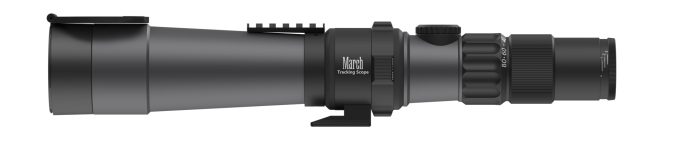
8x-80×56 SFP Tracking Scope
£4,122.00
SKU:
DT80HV56RI-AR-MTR-W2
| Weight | 3 kg |
|---|---|
| 0-Set DeviceA feature that lets you quickly return the adjustment dial back to your zero setting. | – |
| Accessory Rail | Yes |
| Adjustment clickHow far each click moves your shot on the target. | – |
| Adjustment dialControls used to adjust elevation and windage. | – |
| Body tube diameter (mm)The width of the main tube, which affects mounting rings and adjustment range. | – |
| Colour | Grey |
| DistanceThe range at which the focus or parallax adjustment operates. | 10yd – ∞ |
| Elevation TravelThe total vertical adjustment range available for shooting at different distances. | – |
| Exit Pupil (high) (mm)How wide the beam of light is at the highest magnification, affecting brightness at high zoom. | 0.7 |
| Exit Pupil (low) (mm)How wide the beam of light is at the lowest magnification, affecting brightness and ease of viewing. | 4.1 |
| Eye Relief (high)The distance your eye can be from the scope and still see a full image at high magnification. | 79-92 |
| Eye Relief (low)The distance your eye can be from the scope and still see a full image at low magnification. | 76-92 |
| Eyepiece angle | Wide |
| Eyepiece focus | Fast |
| Field of View (real) (high) | 0.3125 |
| Field of View (real) (low)How much area you can see through the scope at the lowest magnification. | 3.125 |
| Focal planeFocal Plane refers to where the reticle sits inside the scope and whether it stays the same size or scales as you change magnification. | Second Focal Plane (SFP) |
| FocusThe control used to sharpen the image and/or reticle for the shooter’s eye. | – |
| Field of View (real) (high) at 100 mThe width of the area visible at 100 meters on the highest magnification. | 0.54 |
| Field of View (real) (high) at 100 yds | 1.64 |
| Field of View (real) (low) at 100 m | 5.45 |
| Field of View (real) (low) at 100 yds | 16.4 |
 IlluminationLights up the reticle to make it easier to see in low-light conditions. IlluminationLights up the reticle to make it easier to see in low-light conditions. | Yes |
| Lens | Super ED |
| Magnification (High)Controls how close or far the target appears when looking through the scope. | 80x |
| Magnification (Low)Controls how close or far the target appears when looking through the scope. | 8x |
| Objective Diameter (mm)The size of the front lens, which affects how much light enters the scope. | 56 |
| Package | No |
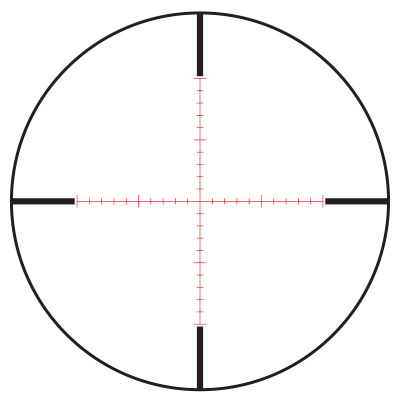
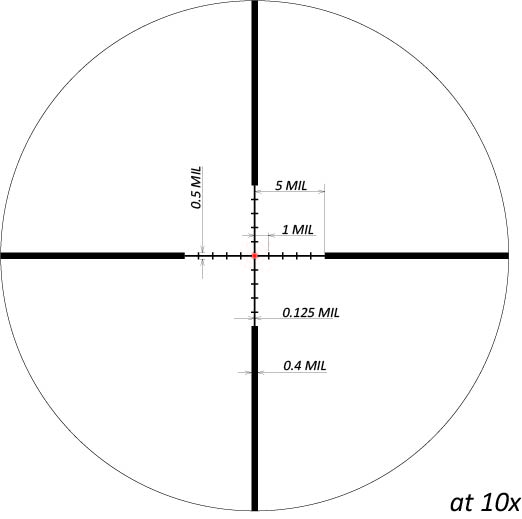
| ReticleThe crosshair or pattern you use to aim and make adjustments. | MTR-W2 |
Sold out
8x-80×56 SFP Tracking Scope
£4,122.00
SKU:
DT80HV56RI-AR-MTR-WFD
| Weight | 3 kg |
|---|---|
| 0-Set DeviceA feature that lets you quickly return the adjustment dial back to your zero setting. | – |
| Accessory Rail | Yes |
| Adjustment clickHow far each click moves your shot on the target. | – |
| Adjustment dialControls used to adjust elevation and windage. | – |
| Body tube diameter (mm)The width of the main tube, which affects mounting rings and adjustment range. | – |
| Colour | Grey |
| DistanceThe range at which the focus or parallax adjustment operates. | 10yd – ∞ |
| Elevation TravelThe total vertical adjustment range available for shooting at different distances. | – |
| Exit Pupil (high) (mm)How wide the beam of light is at the highest magnification, affecting brightness at high zoom. | 0.7 |
| Exit Pupil (low) (mm)How wide the beam of light is at the lowest magnification, affecting brightness and ease of viewing. | 4.1 |
| Eye Relief (high)The distance your eye can be from the scope and still see a full image at high magnification. | 79-92 |
| Eye Relief (low)The distance your eye can be from the scope and still see a full image at low magnification. | 76-92 |
| Eyepiece angle | Wide |
| Eyepiece focus | Fast |
| Field of View (real) (high) | 0.3125 |
| Field of View (real) (low)How much area you can see through the scope at the lowest magnification. | 3.125 |
| Focal planeFocal Plane refers to where the reticle sits inside the scope and whether it stays the same size or scales as you change magnification. | Second Focal Plane (SFP) |
| FocusThe control used to sharpen the image and/or reticle for the shooter’s eye. | – |
| Field of View (real) (high) at 100 mThe width of the area visible at 100 meters on the highest magnification. | 0.54 |
| Field of View (real) (high) at 100 yds | 1.64 |
| Field of View (real) (low) at 100 m | 5.45 |
| Field of View (real) (low) at 100 yds | 16.4 |
| IlluminationLights up the reticle to make it easier to see in low-light conditions. | Yes |
| Lens | Super ED |
| Magnification (High)Controls how close or far the target appears when looking through the scope. | 80x |
| Magnification (Low)Controls how close or far the target appears when looking through the scope. | 8x |
| Objective Diameter (mm)The size of the front lens, which affects how much light enters the scope. | 56 |
| Package | No |
| ReticleThe crosshair or pattern you use to aim and make adjustments. | MTR-WFD |
Sold out
8x-80×56 SFP Tracking Scope
£4,122.00
SKU:
DT80HV56RI-AR-MTR-WFT
| Weight | 3 kg |
|---|---|
| 0-Set DeviceA feature that lets you quickly return the adjustment dial back to your zero setting. | – |
| Accessory Rail | Yes |
| Adjustment clickHow far each click moves your shot on the target. | – |
| Adjustment dialControls used to adjust elevation and windage. | – |
| Body tube diameter (mm)The width of the main tube, which affects mounting rings and adjustment range. | – |
| Colour | Grey |
| DistanceThe range at which the focus or parallax adjustment operates. | 10yd – ∞ |
| Elevation TravelThe total vertical adjustment range available for shooting at different distances. | – |
| Exit Pupil (high) (mm)How wide the beam of light is at the highest magnification, affecting brightness at high zoom. | 0.7 |
| Exit Pupil (low) (mm)How wide the beam of light is at the lowest magnification, affecting brightness and ease of viewing. | 4.1 |
| Eye Relief (high)The distance your eye can be from the scope and still see a full image at high magnification. | 79-92 |
| Eye Relief (low)The distance your eye can be from the scope and still see a full image at low magnification. | 76-92 |
| Eyepiece angle | Wide |
| Eyepiece focus | Fast |
| Field of View (real) (high) | 0.3125 |
| Field of View (real) (low)How much area you can see through the scope at the lowest magnification. | 3.125 |
| Focal planeFocal Plane refers to where the reticle sits inside the scope and whether it stays the same size or scales as you change magnification. | Second Focal Plane (SFP) |
| FocusThe control used to sharpen the image and/or reticle for the shooter’s eye. | – |
| Field of View (real) (high) at 100 mThe width of the area visible at 100 meters on the highest magnification. | 0.54 |
| Field of View (real) (high) at 100 yds | 1.64 |
| Field of View (real) (low) at 100 m | 5.45 |
| Field of View (real) (low) at 100 yds | 16.4 |
| IlluminationLights up the reticle to make it easier to see in low-light conditions. | Yes |
| Lens | Super ED |
| Magnification (High)Controls how close or far the target appears when looking through the scope. | 80x |
| Magnification (Low)Controls how close or far the target appears when looking through the scope. | 8x |
| Objective Diameter (mm)The size of the front lens, which affects how much light enters the scope. | 56 |
| Package | No |
| ReticleThe crosshair or pattern you use to aim and make adjustments. | MTR-WFT |
Sold out
8x-80×56 SFP Tracking Scope
£4,122.00
SKU:
DT80HV56RI-AR-MTR-WTD
| Weight | 3 kg |
|---|---|
| 0-Set DeviceA feature that lets you quickly return the adjustment dial back to your zero setting. | – |
| Accessory Rail | Yes |
| Adjustment clickHow far each click moves your shot on the target. | – |
| Adjustment dialControls used to adjust elevation and windage. | – |
| Body tube diameter (mm)The width of the main tube, which affects mounting rings and adjustment range. | – |
| Colour | Grey |
| DistanceThe range at which the focus or parallax adjustment operates. | 10yd – ∞ |
| Elevation TravelThe total vertical adjustment range available for shooting at different distances. | – |
| Exit Pupil (high) (mm)How wide the beam of light is at the highest magnification, affecting brightness at high zoom. | 0.7 |
| Exit Pupil (low) (mm)How wide the beam of light is at the lowest magnification, affecting brightness and ease of viewing. | 4.1 |
| Eye Relief (high)The distance your eye can be from the scope and still see a full image at high magnification. | 79-92 |
| Eye Relief (low)The distance your eye can be from the scope and still see a full image at low magnification. | 76-92 |
| Eyepiece angle | Wide |
| Eyepiece focus | Fast |
| Field of View (real) (high) | 0.3125 |
| Field of View (real) (low)How much area you can see through the scope at the lowest magnification. | 3.125 |
| Focal planeFocal Plane refers to where the reticle sits inside the scope and whether it stays the same size or scales as you change magnification. | Second Focal Plane (SFP) |
| FocusThe control used to sharpen the image and/or reticle for the shooter’s eye. | – |
| Field of View (real) (high) at 100 mThe width of the area visible at 100 meters on the highest magnification. | 0.54 |
| Field of View (real) (high) at 100 yds | 1.64 |
| Field of View (real) (low) at 100 m | 5.45 |
| Field of View (real) (low) at 100 yds | 16.4 |
| IlluminationLights up the reticle to make it easier to see in low-light conditions. | Yes |
| Lens | Super ED |
| Magnification (High)Controls how close or far the target appears when looking through the scope. | 80x |
| Magnification (Low)Controls how close or far the target appears when looking through the scope. | 8x |
| Objective Diameter (mm)The size of the front lens, which affects how much light enters the scope. | 56 |
| Package | No |
| ReticleThe crosshair or pattern you use to aim and make adjustments. | MTR-WTD |
Sold out
8x-80×56 SFP Tracking Scope
£4,122.00
SKU:
DT80HV56RI-AR-W-DOT
| Weight | 3 kg |
|---|---|
| 0-Set DeviceA feature that lets you quickly return the adjustment dial back to your zero setting. | – |
| Accessory Rail | Yes |
| Adjustment clickHow far each click moves your shot on the target. | – |
| Adjustment dialControls used to adjust elevation and windage. | – |
| Body tube diameter (mm)The width of the main tube, which affects mounting rings and adjustment range. | – |
| Colour | Grey |
| DistanceThe range at which the focus or parallax adjustment operates. | 10yd – ∞ |
| Elevation TravelThe total vertical adjustment range available for shooting at different distances. | – |
| Exit Pupil (high) (mm)How wide the beam of light is at the highest magnification, affecting brightness at high zoom. | 0.7 |
| Exit Pupil (low) (mm)How wide the beam of light is at the lowest magnification, affecting brightness and ease of viewing. | 4.1 |
| Eye Relief (high)The distance your eye can be from the scope and still see a full image at high magnification. | 79-92 |
| Eye Relief (low)The distance your eye can be from the scope and still see a full image at low magnification. | 76-92 |
| Eyepiece angle | Wide |
| Eyepiece focus | Fast |
| Field of View (real) (high) | 0.3125 |
| Field of View (real) (low)How much area you can see through the scope at the lowest magnification. | 3.125 |
| Focal planeFocal Plane refers to where the reticle sits inside the scope and whether it stays the same size or scales as you change magnification. | Second Focal Plane (SFP) |
| FocusThe control used to sharpen the image and/or reticle for the shooter’s eye. | – |
| Field of View (real) (high) at 100 mThe width of the area visible at 100 meters on the highest magnification. | 0.54 |
| Field of View (real) (high) at 100 yds | 1.64 |
| Field of View (real) (low) at 100 m | 5.45 |
| Field of View (real) (low) at 100 yds | 16.4 |
| IlluminationLights up the reticle to make it easier to see in low-light conditions. | Yes |
| Lens | Super ED |
| Magnification (High)Controls how close or far the target appears when looking through the scope. | 80x |
| Magnification (Low)Controls how close or far the target appears when looking through the scope. | 8x |
| Objective Diameter (mm)The size of the front lens, which affects how much light enters the scope. | 56 |
| Package | No |
| ReticleThe crosshair or pattern you use to aim and make adjustments. | W-Dot |
Sold out
8x-80×56 SFP Tracking Scope
£3,804.00
SKU:
DT80HV56R-MML-W1
| Weight | 3 kg |
|---|---|
| 0-Set DeviceA feature that lets you quickly return the adjustment dial back to your zero setting. | – |
| Accessory Rail | Yes |
| Adjustment clickHow far each click moves your shot on the target. | – |
| Adjustment dialControls used to adjust elevation and windage. | – |
| Body tube diameter (mm)The width of the main tube, which affects mounting rings and adjustment range. | – |
| Colour | Grey |
| DistanceThe range at which the focus or parallax adjustment operates. | 10yd – ∞ |
| Elevation TravelThe total vertical adjustment range available for shooting at different distances. | – |
| Exit Pupil (high) (mm)How wide the beam of light is at the highest magnification, affecting brightness at high zoom. | 0.7 |
| Exit Pupil (low) (mm)How wide the beam of light is at the lowest magnification, affecting brightness and ease of viewing. | 4.1 |
| Eye Relief (high)The distance your eye can be from the scope and still see a full image at high magnification. | 79-92 |
| Eye Relief (low)The distance your eye can be from the scope and still see a full image at low magnification. | 76-92 |
| Eyepiece angle | Wide |
| Eyepiece focus | Fast |
| Field of View (real) (high) | 0.3125 |
| Field of View (real) (low)How much area you can see through the scope at the lowest magnification. | 3.125 |
| Focal planeFocal Plane refers to where the reticle sits inside the scope and whether it stays the same size or scales as you change magnification. | Second Focal Plane (SFP) |
| FocusThe control used to sharpen the image and/or reticle for the shooter’s eye. | – |
| Field of View (real) (high) at 100 mThe width of the area visible at 100 meters on the highest magnification. | 0.54 |
| Field of View (real) (high) at 100 yds | 1.64 |
| Field of View (real) (low) at 100 m | 5.45 |
| Field of View (real) (low) at 100 yds | 16.4 |
| IlluminationLights up the reticle to make it easier to see in low-light conditions. | No |
| Lens | Super ED |
| Magnification (High)Controls how close or far the target appears when looking through the scope. | 80x |
| Magnification (Low)Controls how close or far the target appears when looking through the scope. | 8x |
| Objective Diameter (mm)The size of the front lens, which affects how much light enters the scope. | 56 |
| Package | No |
| ReticleThe crosshair or pattern you use to aim and make adjustments. | MML-W1 |
Sold out
8x-80×56 SFP Tracking Scope
£3,594.00
SKU:
DT80HV56
| Weight | 3 kg |
|---|---|
| 0-Set DeviceA feature that lets you quickly return the adjustment dial back to your zero setting. | – |
| Accessory Rail | No |
| Adjustment clickHow far each click moves your shot on the target. | – |
| Adjustment dialControls used to adjust elevation and windage. | – |
| Body tube diameter (mm)The width of the main tube, which affects mounting rings and adjustment range. | – |
| Colour | Grey |
| DistanceThe range at which the focus or parallax adjustment operates. | 10yd – ∞ |
| Elevation TravelThe total vertical adjustment range available for shooting at different distances. | – |
| Exit Pupil (high) (mm)How wide the beam of light is at the highest magnification, affecting brightness at high zoom. | 0.7 |
| Exit Pupil (low) (mm)How wide the beam of light is at the lowest magnification, affecting brightness and ease of viewing. | 4.1 |
| Eye Relief (high)The distance your eye can be from the scope and still see a full image at high magnification. | 79-92 |
| Eye Relief (low)The distance your eye can be from the scope and still see a full image at low magnification. | 76-92 |
| Eyepiece angle | Wide |
| Eyepiece focus | Fast |
| Field of View (real) (high) | 0.3125 |
| Field of View (real) (low)How much area you can see through the scope at the lowest magnification. | 3.125 |
| Focal planeFocal Plane refers to where the reticle sits inside the scope and whether it stays the same size or scales as you change magnification. | Second Focal Plane (SFP) |
| FocusThe control used to sharpen the image and/or reticle for the shooter’s eye. | – |
| Field of View (real) (high) at 100 mThe width of the area visible at 100 meters on the highest magnification. | 0.54 |
| Field of View (real) (high) at 100 yds | 1.64 |
| Field of View (real) (low) at 100 m | 5.45 |
| Field of View (real) (low) at 100 yds | 16.4 |
| IlluminationLights up the reticle to make it easier to see in low-light conditions. | No |
| Lens | Super ED |
| Magnification (High)Controls how close or far the target appears when looking through the scope. | 80x |
| Magnification (Low)Controls how close or far the target appears when looking through the scope. | 8x |
| Objective Diameter (mm)The size of the front lens, which affects how much light enters the scope. | 56 |
| Package | No |
| ReticleThe crosshair or pattern you use to aim and make adjustments. | NO-RETICLE |
Sold out
8x-80×56 SFP Tracking Scope
£4,122.00
SKU:
DT80HV56RI-AR-MML-W1
| Weight | 3 kg |
|---|---|
| 0-Set DeviceA feature that lets you quickly return the adjustment dial back to your zero setting. | – |
| Accessory Rail | Yes |
| Adjustment clickHow far each click moves your shot on the target. | – |
| Adjustment dialControls used to adjust elevation and windage. | – |
| Body tube diameter (mm)The width of the main tube, which affects mounting rings and adjustment range. | – |
| Colour | Grey |
| DistanceThe range at which the focus or parallax adjustment operates. | 10yd – ∞ |
| Elevation TravelThe total vertical adjustment range available for shooting at different distances. | – |
| Exit Pupil (high) (mm)How wide the beam of light is at the highest magnification, affecting brightness at high zoom. | 0.7 |
| Exit Pupil (low) (mm)How wide the beam of light is at the lowest magnification, affecting brightness and ease of viewing. | 4.1 |
| Eye Relief (high)The distance your eye can be from the scope and still see a full image at high magnification. | 79-92 |
| Eye Relief (low)The distance your eye can be from the scope and still see a full image at low magnification. | 76-92 |
| Eyepiece angle | Wide |
| Eyepiece focus | Fast |
| Field of View (real) (high) | 0.3125 |
| Field of View (real) (low)How much area you can see through the scope at the lowest magnification. | 3.125 |
| Focal planeFocal Plane refers to where the reticle sits inside the scope and whether it stays the same size or scales as you change magnification. | Second Focal Plane (SFP) |
| FocusThe control used to sharpen the image and/or reticle for the shooter’s eye. | – |
| Field of View (real) (high) at 100 mThe width of the area visible at 100 meters on the highest magnification. | 0.54 |
| Field of View (real) (high) at 100 yds | 1.64 |
| Field of View (real) (low) at 100 m | 5.45 |
| Field of View (real) (low) at 100 yds | 16.4 |
| IlluminationLights up the reticle to make it easier to see in low-light conditions. | Yes |
| Lens | Super ED |
| Magnification (High)Controls how close or far the target appears when looking through the scope. | 80x |
| Magnification (Low)Controls how close or far the target appears when looking through the scope. | 8x |
| Objective Diameter (mm)The size of the front lens, which affects how much light enters the scope. | 56 |
| Package | No |
| ReticleThe crosshair or pattern you use to aim and make adjustments. | MML-W1 |
Sold out
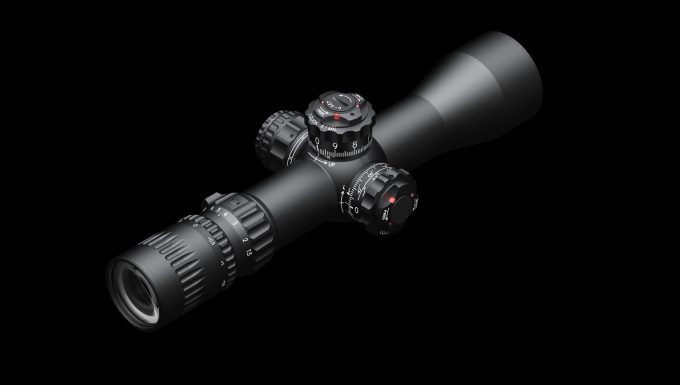
March 1.5x-15×42 – Shuriken Turrets
£2,742.00
SKU:
D15V42FDIMLN-DR-TR2B
| Weight | 2 kg |
|---|---|
| ReticleThe crosshair or pattern you use to aim and make adjustments. | DR-TR2B |
| IlluminationLights up the reticle to make it easier to see in low-light conditions. | Yes |
| Adjustment dialControls used to adjust elevation and windage. | Normal |
| Focal planeFocal Plane refers to where the reticle sits inside the scope and whether it stays the same size or scales as you change magnification. | Dual Focal Plane (DFP) |
| Body tube diameter (mm)The width of the main tube, which affects mounting rings and adjustment range. | 34 |
| DistanceThe range at which the focus or parallax adjustment operates. | 10yd – ∞ |
| Elevation TravelThe total vertical adjustment range available for shooting at different distances. | 40mil |
| Exit Pupil (high) (mm)How wide the beam of light is at the highest magnification, affecting brightness at high zoom. | 2.8 |
| Exit Pupil (low) (mm)How wide the beam of light is at the lowest magnification, affecting brightness and ease of viewing. | 8.7 |
| Eye Relief (high)The distance your eye can be from the scope and still see a full image at high magnification. | 73-98 |
| Eye Relief (low)The distance your eye can be from the scope and still see a full image at low magnification. | 72-97 |
| 0-Set DeviceA feature that lets you quickly return the adjustment dial back to your zero setting. | No, Yes |
| Eyepiece angle | Normal |
| Eyepiece focus | Fast |
| Field of View (real) (high) | 1.33 |
| Field of View (real) (low)How much area you can see through the scope at the lowest magnification. | 13.3 |
| Field of View (real) (high) at 100 mThe width of the area visible at 100 meters on the highest magnification. | 2.3 |
| Field of View (real) (high) at 100 yds | 6.9 |
| Field of View (real) (low) at 100 m | 23.4 |
| Field of View (real) (low) at 100 yds | 70.2 |
| Lens | ED |
| Magnification (Low)Controls how close or far the target appears when looking through the scope. | 1.5x |
| Magnification (High)Controls how close or far the target appears when looking through the scope. | 15x |
| Objective Diameter (mm)The size of the front lens, which affects how much light enters the scope. | 42.0 |
| Windage TravelThe total left-to-right adjustment range for compensating for wind or zeroing. | 20mil |
| Magnification | 1.5x-15 |
Sold out
March 1.5x-15×42 – Shuriken Turrets
£2,646.00
SKU:
D15V42FIMLN-FML4
| Weight | 2 kg |
|---|---|
| ReticleThe crosshair or pattern you use to aim and make adjustments. | FML-4 |
| IlluminationLights up the reticle to make it easier to see in low-light conditions. | Yes |
| Adjustment dialControls used to adjust elevation and windage. | Normal |
| Focal planeFocal Plane refers to where the reticle sits inside the scope and whether it stays the same size or scales as you change magnification. | First Focal Plane (FFP) |
| Body tube diameter (mm)The width of the main tube, which affects mounting rings and adjustment range. | 34 |
| DistanceThe range at which the focus or parallax adjustment operates. | 10yd – ∞ |
| Elevation TravelThe total vertical adjustment range available for shooting at different distances. | 40mil |
| Exit Pupil (high) (mm)How wide the beam of light is at the highest magnification, affecting brightness at high zoom. | 2.8 |
| Exit Pupil (low) (mm)How wide the beam of light is at the lowest magnification, affecting brightness and ease of viewing. | 8.7 |
| Eye Relief (high)The distance your eye can be from the scope and still see a full image at high magnification. | 73-98 |
| Eye Relief (low)The distance your eye can be from the scope and still see a full image at low magnification. | 72-97 |
| 0-Set DeviceA feature that lets you quickly return the adjustment dial back to your zero setting. | No, Yes |
| Eyepiece angle | Normal |
| Eyepiece focus | Fast |
| Field of View (real) (high) | 1.33 |
| Field of View (real) (low)How much area you can see through the scope at the lowest magnification. | 13.3 |
| Field of View (real) (high) at 100 mThe width of the area visible at 100 meters on the highest magnification. | 2.3 |
| Field of View (real) (high) at 100 yds | 6.9 |
| Field of View (real) (low) at 100 m | 23.4 |
| Field of View (real) (low) at 100 yds | 70.2 |
| Lens | ED |
| Magnification (Low)Controls how close or far the target appears when looking through the scope. | 1.5x |
| Magnification (High)Controls how close or far the target appears when looking through the scope. | 15x |
| Objective Diameter (mm)The size of the front lens, which affects how much light enters the scope. | 42.0 |
| Windage TravelThe total left-to-right adjustment range for compensating for wind or zeroing. | 20mil |
| Magnification | 1.5x-15 |
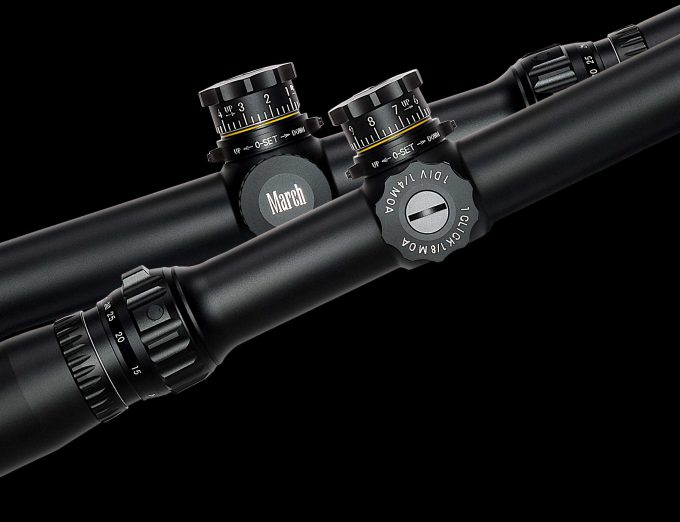
Sold out
March 10x-60×52 SFP Rifle Scope
£2,646.00
SKU:
D60V52TM-MTR5
| Weight | 2 kg |
|---|---|
| ReticleThe crosshair or pattern you use to aim and make adjustments. | MTR-5 |
| IlluminationLights up the reticle to make it easier to see in low-light conditions. | No |
| Adjustment dialControls used to adjust elevation and windage. | Tactical |
| Focal planeFocal Plane refers to where the reticle sits inside the scope and whether it stays the same size or scales as you change magnification. | |
| Body tube diameter (mm)The width of the main tube, which affects mounting rings and adjustment range. | 30 |
| DistanceThe range at which the focus or parallax adjustment operates. | 10yd – ∞ |
| Elevation TravelThe total vertical adjustment range available for shooting at different distances. | 60moa |
| Exit Pupil (high) (mm)How wide the beam of light is at the highest magnification, affecting brightness at high zoom. | 0.86 |
| Exit Pupil (low) (mm)How wide the beam of light is at the lowest magnification, affecting brightness and ease of viewing. | – |
| Eye Relief (high)The distance your eye can be from the scope and still see a full image at high magnification. | 95-101 |
| Eye Relief (low)The distance your eye can be from the scope and still see a full image at low magnification. | 88-99 |
| 0-Set DeviceA feature that lets you quickly return the adjustment dial back to your zero setting. | No, Yes |
| Eyepiece angle | Normal |
| Eyepiece focus | Normal |
| Field of View (real) (high) | 0.333 |
| Field of View (real) (low)How much area you can see through the scope at the lowest magnification. | 2.0 |
| Field of View (real) (high) at 100 mThe width of the area visible at 100 meters on the highest magnification. | 0.58 |
| Field of View (real) (high) at 100 yds | 1.7 |
| Field of View (real) (low) at 100 m | 3.49 |
| Field of View (real) (low) at 100 yds | 10.5 |
| Lens | ED |
| Magnification (Low)Controls how close or far the target appears when looking through the scope. | 10x |
| Magnification (High)Controls how close or far the target appears when looking through the scope. | 60x |
| Objective Diameter (mm)The size of the front lens, which affects how much light enters the scope. | 52.0 |
| Windage TravelThe total left-to-right adjustment range for compensating for wind or zeroing. | 40moa |
| Adjustment clickHow far each click moves your shot on the target. | 1/4 Moa, 1/8 Moa |
Sold out
March 10x-60×52 SFP Rifle Scope
£2,556.00
SKU:
D60V52LM-MTR5
| Weight | 2 kg |
|---|---|
| ReticleThe crosshair or pattern you use to aim and make adjustments. | MTR-5 |
| IlluminationLights up the reticle to make it easier to see in low-light conditions. | No |
| Adjustment dialControls used to adjust elevation and windage. | Normal |
| Focal planeFocal Plane refers to where the reticle sits inside the scope and whether it stays the same size or scales as you change magnification. | |
| Body tube diameter (mm)The width of the main tube, which affects mounting rings and adjustment range. | 30 |
| DistanceThe range at which the focus or parallax adjustment operates. | 10yd – ∞ |
| Elevation TravelThe total vertical adjustment range available for shooting at different distances. | 60moa |
| Exit Pupil (high) (mm)How wide the beam of light is at the highest magnification, affecting brightness at high zoom. | 0.86 |
| Exit Pupil (low) (mm)How wide the beam of light is at the lowest magnification, affecting brightness and ease of viewing. | – |
| Eye Relief (high)The distance your eye can be from the scope and still see a full image at high magnification. | 95-101 |
| Eye Relief (low)The distance your eye can be from the scope and still see a full image at low magnification. | 88-99 |
| 0-Set DeviceA feature that lets you quickly return the adjustment dial back to your zero setting. | No, Yes |
| Eyepiece angle | Normal |
| Eyepiece focus | Normal |
| Field of View (real) (high) | 0.333 |
| Field of View (real) (low)How much area you can see through the scope at the lowest magnification. | 2.0 |
| Field of View (real) (high) at 100 mThe width of the area visible at 100 meters on the highest magnification. | 0.58 |
| Field of View (real) (high) at 100 yds | 1.7 |
| Field of View (real) (low) at 100 m | 3.49 |
| Field of View (real) (low) at 100 yds | 10.5 |
| Lens | ED |
| Magnification (Low)Controls how close or far the target appears when looking through the scope. | 10x |
| Magnification (High)Controls how close or far the target appears when looking through the scope. | 60x |
| Objective Diameter (mm)The size of the front lens, which affects how much light enters the scope. | 52.0 |
| Windage TravelThe total left-to-right adjustment range for compensating for wind or zeroing. | 40moa |
| Adjustment clickHow far each click moves your shot on the target. | 1/4 Moa, 1/8 Moa |


